
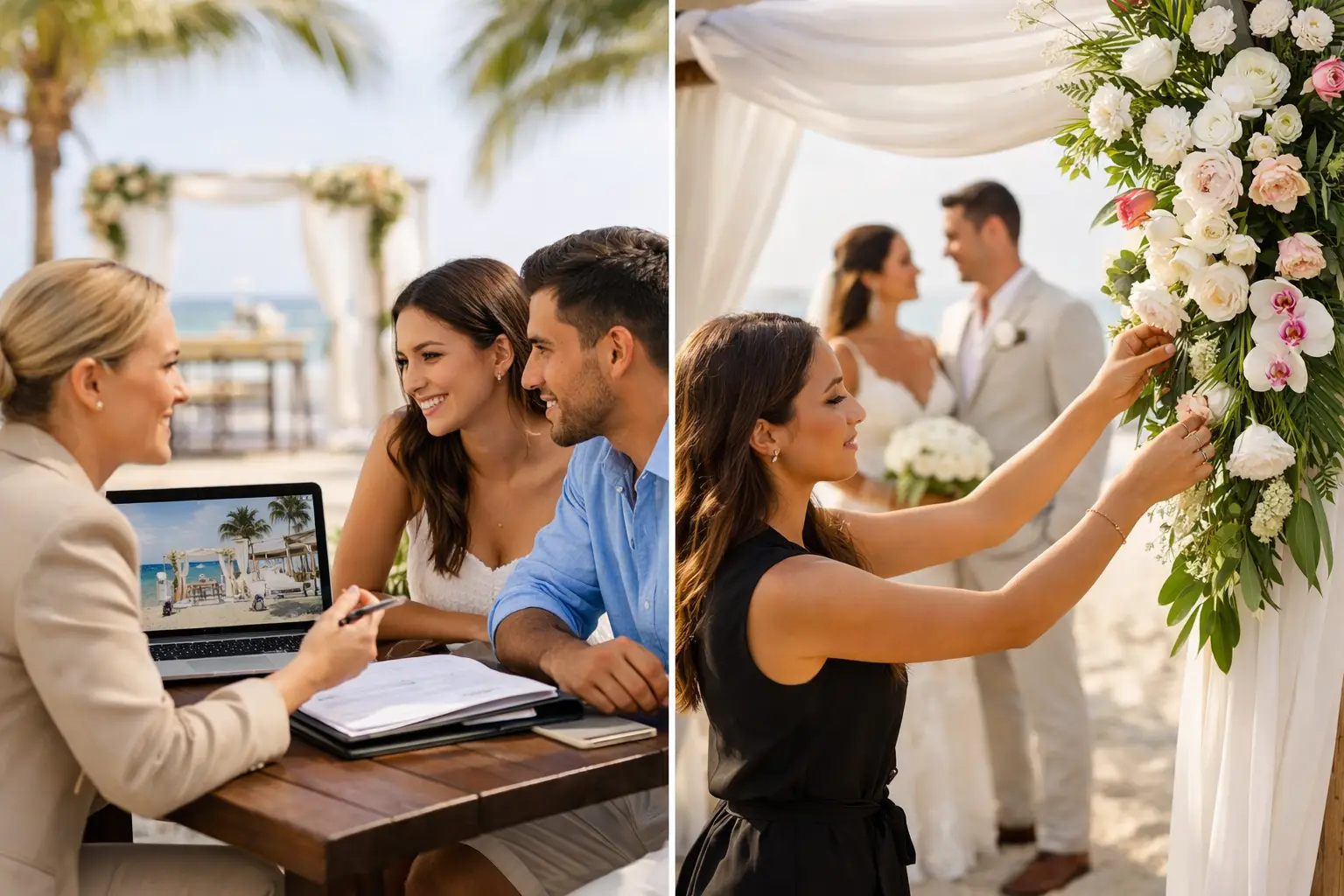
Planner Versus Decorator: Who Does What?
A sunset ceremony in Tulum may look effortless in photographs: white flowers moving in the breeze, a candlelit dinner beneath a custom gazebo, and every guest in the right place at the right time. Behind that feeling is a team with clearly defined responsibilities. When considering a planner versus decorator, the difference matters because each professional protects a different part of your destination wedding experience.
For couples planning from the United States, the right answer is rarely about choosing logistics or beauty. Your wedding should have both. The key is understanding who is responsible for each element, where their roles overlap, and what level of support will help you feel calm from your first venue visit to the final dance on the beach.
Planner versus decorator: the essential difference
A wedding planner manages the event as a whole. They help turn a meaningful vision into an organized, workable celebration by coordinating the people, schedule, decisions, and details required to make it happen. For a Riviera Maya wedding, that can include venue guidance, vendor communication, contract support, transportation planning, ceremony timing, guest logistics, payment schedules, and on-site coordination.
A wedding decorator, sometimes called an event designer or floral and decor specialist, focuses on how the wedding looks and feels. Their work may include floral arrangements, ceremony structures, table settings, lounge furniture, linens, candles, lighting, signage, and the visual composition of each space.
Put simply, your planner asks, “What needs to happen, when, and with whom?” Your decorator asks, “How should this moment feel when your guests arrive?” Both questions are essential. One protects the flow of the day; the other shapes its atmosphere.
What a destination wedding planner handles
A planner is your advocate and central point of coordination, especially when you are arranging a wedding from another country. They help you make decisions in the right order, so you are not selecting dinner menus before you have confirmed a reception layout or reserving a photographer before you understand your ceremony timeline.
In the Mexican Caribbean, strong local knowledge is particularly valuable. Beach venues have access rules, weather considerations, setup windows, sound limitations, vendor requirements, and transportation variables that may not be obvious while planning from home. An experienced planner understands how the realities of a specific location in Cancun, Playa del Carmen, Puerto Aventuras, or Tulum affect your wedding day.
Your planner may coordinate the ceremony processional, make sure the musicians know their cue, confirm that the cake arrives on time, guide vendors to their assigned setup areas, and keep dinner service aligned with speeches and dancing. If rain clouds appear offshore or a shuttle runs late, the planner is often the person quietly adjusting the plan while you remain present with your guests.
Planning services vary, so always clarify what is included. Some planners offer full-service support from venue selection through the wedding weekend. Others provide partial planning or day-of coordination. For a destination celebration, couples often appreciate full planning because there are more moving parts to manage across distance, language, and time zones.
What a wedding decorator brings to life
A decorator translates your taste into a setting with personality. Perhaps you picture a refined all-white ceremony on Playa Paraiso, colorful tropical florals for a joyful reception in Playa del Carmen, or a warm, candlelit dinner under the palms in Tulum. A decorator gives those ideas shape through color, texture, scale, and thoughtful details.
Their work begins before the wedding day. They may create a design concept, recommend palettes, prepare inspiration boards, suggest flower varieties suited to the season, and develop a floor plan that feels inviting rather than crowded. They also consider practical visual questions: Will the ceremony arch frame the ocean without blocking guests’ view? Does the lighting flatter the space after sunset? Are centerpieces low enough for conversation across the table?
On the day itself, the decorating team installs the elements that create the setting: custom gazebos, flowers, furniture rentals, place settings, candles, dance floor details, and professional lighting. Their goal is not simply to add more decor. It is to create a cohesive environment that feels intentional and personal to you.
Beautiful design also requires flexibility. A white floral installation may cost more in a season when certain blooms are less available, and beachfront conditions can influence which materials, candles, or hanging elements are appropriate. A knowledgeable decorator can offer alternatives that preserve the feeling you love without forcing a design that does not suit the venue.
Where planning and decoration overlap
The planner and decorator should not work in separate lanes without communicating. Design choices affect logistics, and logistics affect design.
For example, a ceremony structure needs more than a lovely sketch. It may require approval from the venue, a delivery schedule, secure installation for coastal winds, and enough time for setup before guests arrive. A suspended lighting installation may need power planning, safe placement, and coordination with dinner service. Even a dramatic sweetheart table needs to fit comfortably within the reception flow.
This is why a full-service planning company with in-house or closely coordinated design support can be especially reassuring. Instead of asking you to relay updates between multiple teams, your planner and decorator can align the timeline, floor plan, budget, and visual direction from the beginning. At Weddings on the Beach, this integrated approach helps couples create celebrations that feel polished while remaining practical for the location.
Still, integration does not mean every couple needs the most elaborate decor package. A naturally beautiful beachfront venue may call for restrained florals, elegant chairs, soft lighting, and a few meaningful personal touches. The best design supports the setting rather than competing with it.
How to decide what support you need
If you have already booked a venue and most vendors, a decorator may be the service you need most to bring a clear visual vision together. This can work well for couples who are confident organizers, have time to manage contracts and communication, and only need help elevating the ceremony and reception spaces.
If you are still choosing between venues, coordinating guests’ travel, comparing local vendors, or feeling uncertain about where to begin, start with a planner. Their guidance can prevent costly decisions made too early and give you a realistic picture of what is possible within your budget and preferred date.
For many destination couples, the strongest choice is planning and decor support together. You can spend months selecting beautiful details, but the experience will feel far more relaxed when someone is also ensuring that those details arrive, are installed correctly, and fit the timing of the day.
Consider these questions as you compare services:
- Do you need help selecting and managing a venue and vendor team?
- Are you planning from afar with limited opportunities for in-person meetings?
- Do you have a defined design style, or do you want professional creative direction?
- Would you rather manage the wedding-day schedule yourself, or enjoy your guests without checking on deliveries and setup?
- Does your venue have location-specific rules for beach ceremonies, decor installation, music, or event timing?
Your answers will reveal whether you need a decorator, a planner, or a coordinated team that can handle both.
Questions to ask before you book
Do not assume that “planning” includes decor or that “decor” includes coordination. Ask each professional to explain their scope in practical terms. Who creates the production timeline? Who communicates final setup instructions to the venue? Who is present while flowers, furniture, and lighting are installed? Who handles a missing rental item or a weather-related layout change?
It is also helpful to ask how they build and track the budget. Some design elements have delivery, labor, installation, or removal costs that are easy to overlook. A transparent team will explain these details early and recommend choices that reflect both your priorities and your investment.
Finally, ask to see how the planner and decorator collaborate. The answer should feel clear, not vague. You deserve to know who is guiding each decision and who will be there to protect the experience you have imagined.
Let your wedding feel as easy as it looks
Your wedding decor creates the first breathtaking impression. Your planning creates the freedom to enjoy it. Whether your vision is a barefoot ceremony in the sand or an elegant celebration beneath glowing lights, choose support that gives equal care to the romance you see and the coordination you do not have to think about. That is how a destination wedding becomes not just beautiful, but truly yours.
Comments are closed.