
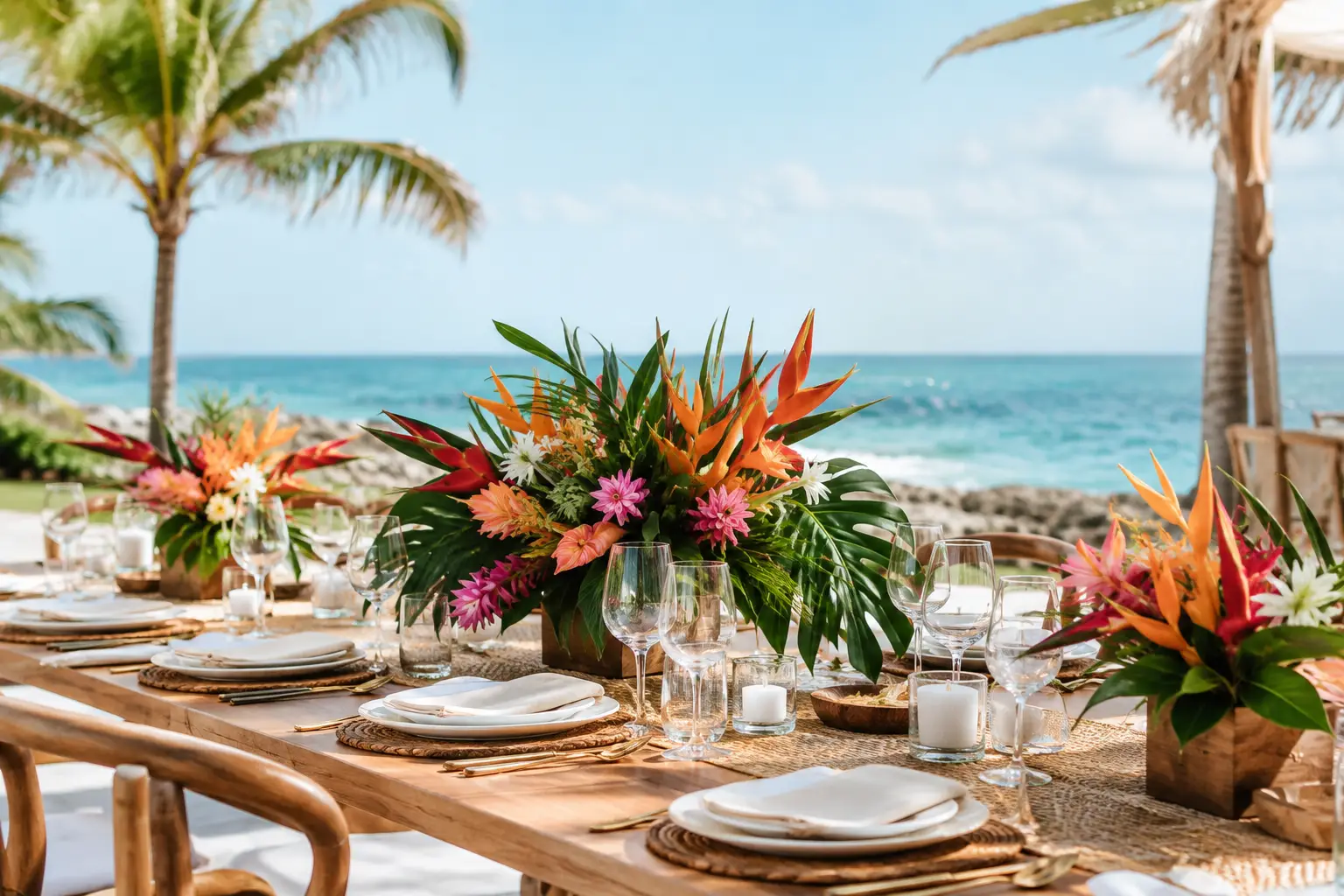
How to Style Tropical Wedding Tables Beautifully
A tropical reception table should feel like it belongs exactly where your celebration is taking place: beneath Riviera Maya palms, beside Caribbean-blue water, or within a candlelit jungle setting in Tulum. To style tropical wedding tables beautifully, think beyond adding a few palm leaves. The most memorable designs balance the destination’s natural richness with the details that make the celebration unmistakably yours.
For couples planning from the United States, that balance is often the difference between a table that looks lovely in a single photo and a reception that feels thoughtfully designed from the moment guests take their seats. Color, texture, lighting, table shape, and even the breeze at your venue all play a role. With experienced local coordination, these elements can come together with ease while you stay focused on the people and moments that matter most.
Begin With the Feeling You Want Guests to Have
Tropical does not have to mean loud, themed, or overly colorful. It can be relaxed and sun-washed, refined and romantic, or lush and dramatic. Before choosing flowers or linens, decide how you want the reception to feel after sunset.
A Playa Paraiso dinner on the sand may call for airy florals, natural wood, woven accents, and candlelight that glows softly against the ocean. A jungle celebration in Tulum can support deeper greens, sculptural orchids, black or smoked-glass details, and dramatic hanging lights. At a polished Cancun resort, crisp white linens with vibrant tropical blooms may feel fresh, celebratory, and elegant.
This first decision gives every later choice a purpose. It also prevents a common design misstep: combining too many beautiful ideas that compete with one another. A tropical table needs layers, but those layers should tell one story.
Choose a Tropical Palette With Depth
The Riviera Maya offers color everywhere – turquoise water, ivory sand, bright bougainvillea, lush green foliage, and spectacular sunset tones. You do not need to use every shade at once. A focused palette usually creates a more elevated result.
For a light and romantic look, pair white, cream, blush, and soft peach with fresh greenery. This approach is especially lovely for daytime receptions and beach venues where the landscape is already visually active. Add small accents of coral or warm gold if you would like a little more energy without losing softness.
For a bolder look, consider combinations such as fuchsia and orange, coral and mango, or deep burgundy against layered jungle greens. These palettes are striking for evening celebrations, but they need room to breathe. Neutral linens, clear glassware, or natural wood furniture can keep vivid flowers from feeling overwhelming.
A third option is tropical minimalism: monochromatic white florals, abundant palms, textured green leaves, and warm candlelight. It is a beautiful fit for couples who love the destination but prefer a quieter, more modern expression of it.
Let Flowers and Foliage Do Different Jobs
Flowers bring emotion and color. Foliage creates shape, movement, and a sense of place. Using both thoughtfully is what makes a tropical centerpiece feel intentional rather than simply oversized.
Monstera leaves, palm fronds, banana leaves, philodendron, and tropical ferns can create a lush base for floral arrangements. Orchids, anthuriums, heliconias, ginger flowers, birds of paradise, roses, and ranunculus can then add romance, dimension, and personality. Availability changes with season and local supply, so flexibility is helpful. A skilled floral designer can preserve your preferred mood even if a particular bloom is not ideal for your wedding date.
For guest comfort, avoid placing dense arrangements directly at eye level across the entire table. Choose low, full centerpieces that allow easy conversation, or taller designs with clear stems and open space beneath the flowers. Long tables can also look beautiful with a series of smaller arrangements, foliage runners, and candle clusters rather than one continuous wall of flowers.
Style Tropical Wedding Tables Around the Venue
The table design should respond to the setting, not fight it. A beachfront reception has different practical needs than a garden, rooftop, or cenote-inspired venue.
On the beach, wind is a real design consideration. Tall taper candles, loose paper menus, lightweight vessels, and delicate blooms may need special planning. Low-profile centerpieces, protected hurricane glass, weighted place cards, and stable furniture help preserve the look throughout dinner. The result can still feel effortless, but it is the product of thoughtful preparation.
In a jungle or garden venue, humidity and lower evening light become part of the equation. Rich foliage, textured linens, warm lighting, and glass candle vessels often create an intimate atmosphere. For a resort terrace in Puerto Aventuras or Playa del Carmen, you may have more flexibility with structured centerpieces, statement chargers, and polished tablescape details.
This is where local expertise matters. A design that photographs beautifully in a studio may not perform well on sand after an ocean breeze arrives. The right plan considers the weather, the venue’s surfaces, dinner timing, service flow, and how each detail will hold up from ceremony through dancing.
Build the Table in Layers
A memorable table is rarely about one centerpiece. It is created through a sequence of small, considered details that invite guests to linger.
Start with the foundation. A bare wood table can feel warm and organic, while a linen-draped table may bring softness and formality. Neutral linen allows lush florals to lead, while patterned napkins or runners add texture without requiring additional color. If you are using rental chairs, select a style that supports the overall mood. Natural wood, woven materials, acrylic, and elegant upholstered options all create very different impressions.
Next, bring in the place setting. Chargers, dinnerware, glassware, napkins, and menus are small individually, yet together they establish the level of refinement. Rattan chargers and hand-tied napkins can feel relaxed and coastal. Gold flatware, colored glassware, and tailored menus offer a more formal finish. You do not need every element to make a statement. Often, one distinctive detail is enough.
Then add the atmosphere. Candlelight is especially transformative in the Mexican Caribbean, where sunset shifts quickly into a warm, romantic evening. Clustered votives, hurricanes, and low glass vessels create depth without blocking conversation. Professional lighting above and around the tables can extend this glow, making florals, faces, and photographs look beautiful long after daylight fades.
Add Personal Details With Restraint
Your tables are an opportunity to share pieces of your story, but personal does not have to mean crowded. A custom menu inspired by your favorite local flavors, a meaningful phrase at each place setting, or table names based on places you have traveled together can be more moving than an abundance of favors.
If you are incorporating Mexican artisanal elements, choose them with intention. Handwoven textures, locally inspired ceramics, or a color detail that nods to the region can create a deeper connection to your destination. The goal is appreciation, not a resort-themed display. When these accents are paired with elegant florals and quality rentals, the result feels sophisticated and genuinely connected to place.
Think About the Guest Experience, Not Only the Photos
A tablescape should photograph beautifully, but it also has a job to do. Guests need room for shared plates, drinks, personal items, and conversation. They should be able to see across the table, read the menu in evening light, and feel comfortable throughout the meal.
This is why table shape and guest count matter. Long family-style tables encourage a communal, celebratory feeling and give you a wonderful canvas for runners and floral moments. Round tables can create a more traditional, intimate dining experience and allow each centerpiece to stand on its own. Mixed table shapes can look spectacular, though they require a clear design plan so the reception still feels cohesive.
Consider your menu service as well. If dinner includes generous shared platters, leave more open table space. If your reception is cocktail-forward with passed bites and a late dinner, you may be able to use more dramatic centerpieces. There is no single correct answer. The best choice reflects how you want the evening to unfold.
Let the Design Change as the Night Begins
The most beautiful tropical wedding tables evolve with the celebration. In daylight, guests notice the flowers, linens, and surrounding landscape. After sunset, lighting becomes the leading element. Candles glow, glassware catches reflections, and overhead bistro lights or custom installations make the entire reception feel more intimate.
Planning this transition is one of the details that turns a pretty table into a complete event design. At Weddings on the Beach, we consider décor, florals, furniture, and lighting as one connected experience, so the reception feels just as special at the final toast as it did when your guests first arrived.
Your tropical tables do not need to follow a trend to feel unforgettable. Let the Riviera Maya provide the sense of place, then choose the colors, textures, and personal touches that feel true to your celebration. When every detail is designed around both beauty and comfort, your guests will remember more than the table – they will remember how it felt to gather around it.
Comments are closed.