
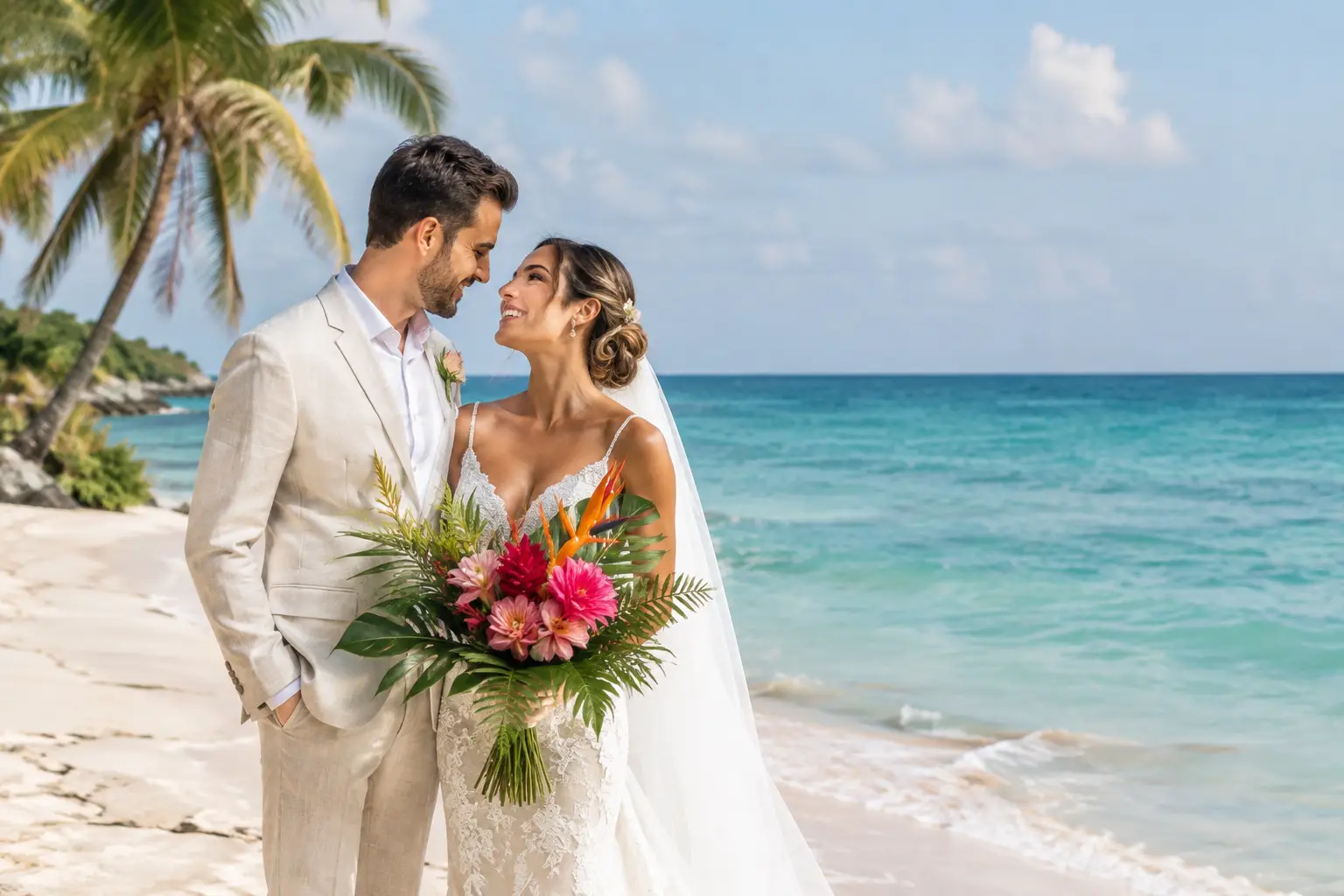
A Mexican Caribbean Wedding Weather Guide
A sunset ceremony in Tulum can feel like a scene written just for the two of you – warm sand beneath your feet, palms moving softly in the breeze, and the Caribbean turning shades of gold and rose behind your vows. But the same coastline that makes a destination wedding so romantic also has its own weather rhythm. This Mexican Caribbean wedding weather guide will help you choose a date with confidence, understand the seasonal trade-offs, and plan for a celebration that feels beautiful in every forecast.
The Mexican Caribbean Wedding Weather Guide by Season
The Mexican Caribbean, including Cancun, Playa del Carmen, Puerto Aventuras, Playa Paraiso, Tulum, and the Riviera Maya, is warm year-round. That does not mean every month feels the same. Humidity, rainfall, wind, sea conditions, and guest travel costs all shift across the calendar.
For most couples, the best wedding date comes down to a personal balance: do you want the driest weather, a quieter resort experience, a more flexible budget, or the lush tropical atmosphere that arrives with summer rains? A knowledgeable local planner helps turn that choice into a thoughtful event plan, not a gamble.
November through April: Dry season and golden evenings
This is the most sought-after period for Riviera Maya weddings, especially from January through March. Days are generally sunny, evenings are comfortable, and rainfall is less frequent than in summer. Daytime temperatures often sit in the low to mid-80s Fahrenheit, while evenings can feel pleasantly warm rather than intensely hot.
November is especially lovely after the rainier months have passed. The landscape is green, the sea is still inviting, and the air often feels fresher. December brings a festive energy, although holiday weeks can mean higher travel demand and limited venue availability. January through March are consistently popular for couples who want reliable outdoor conditions and comfortable guest experiences.
April is still an excellent option, particularly earlier in the month. Temperatures begin to climb, but the region has not yet reached peak summer humidity. It is a beautiful choice for an oceanfront ceremony followed by an open-air reception with candlelight, elegant florals, and tailored lighting.
The trade-off is demand. Prime dates, preferred venues, and trusted vendors tend to book earlier in the dry season. Your guests may also find higher airfare and resort rates, particularly around Christmas, New Year’s, spring break, and Easter.
May through October: Warm, lush, and full of tropical character
Summer and early fall offer a different kind of Riviera Maya beauty. The landscape is vibrant, the Caribbean is exceptionally warm, and venues may have greater availability. Couples often find that this season provides more room for creativity and value, especially when they are flexible with dates.
May and June are hot, sunny, and humid, with a greater chance of a quick afternoon shower. These showers are often brief rather than all-day events, and they can leave the sky looking even more dramatic by ceremony time. A later ceremony start, shaded guest seating, chilled welcome drinks, and breathable attire make a meaningful difference.
July and August are the warmest months. They can be wonderful for couples who love a true tropical setting and are prepared to embrace the heat. Think lightweight wedding fabrics, updos, fans, refreshing cocktails, and a reception design that prioritizes airflow. Air-conditioned getting-ready spaces are particularly valuable during these months.
September and October bring the highest likelihood of rain and tropical weather systems. They are often among the least expensive months to travel, but they require a serious rain plan, not just a hopeful glance at the forecast. For some couples, the cost savings and quieter atmosphere are worth it. For others, especially those set on a fully open beach reception, a dry-season date may bring more peace of mind.
What Hurricane Season Really Means for Your Wedding
Official hurricane season runs from June through November, with the greatest activity typically occurring between August and October. It is understandable that this makes couples nervous, but hurricane season does not mean a hurricane will affect your wedding. Many dates pass with sunshine, short rains, or no disruption at all.
The real question is whether your wedding plan is resilient. A venue with a polished indoor option or a covered, well-designed reception space gives you flexibility without sacrificing the experience. Your planning timeline should also allow for weather monitoring, vendor coordination, and clear communication with guests if conditions change.
Travel insurance is worth discussing with your guests, particularly for weddings scheduled during this period. Couples should also consider event insurance based on their individual plans and contracts. A local team can advise on the practical details, but insurance decisions should always be made with your provider and a clear understanding of coverage.
At Weddings on the Beach, we believe a backup plan should still feel like your wedding, not a compromise made at the last minute. That means considering rain cover, floor plans, lighting, ceremony timing, furniture placement, and guest comfort from the very beginning.
Rain Plans Can Still Be Beautiful
A refined weather plan does more than protect the ceremony. It protects the feeling of the day. The best plans are built into the design so naturally that guests simply experience a gorgeous celebration, whether dinner is set beneath the stars or beneath a covered terrace glowing with warm light.
For a beach ceremony, consider an alternate time as well as an alternate location. In the Mexican Caribbean, a rain shower may pass quickly, and moving a ceremony back by 20 or 30 minutes can be enough to preserve your outdoor moment. For receptions, covered spaces, clear-top tents where appropriate, and venue terraces can create an intimate, elevated atmosphere.
Professional lighting becomes especially important if clouds arrive or the schedule shifts later into the evening. Soft overhead lighting, candles, and thoughtfully placed accents can make a covered reception feel romantic and intentional. Your floral choices matter too. Hardy tropical blooms and structured arrangements tend to perform better in heat and humidity than delicate flowers that need cooler, drier conditions.
Weather Details Couples Often Overlook
Rain gets most of the attention, but heat, wind, and the condition of the beach can shape the guest experience just as much. A ceremony at 3:00 p.m. may look beautiful in photos, yet it can place guests in the strongest sun of the day. A later start, often close to sunset, usually feels more comfortable and creates softer natural light.
Wind is also part of a Caribbean beachfront celebration. It brings welcome relief on warm days, but it can affect veils, aisle décor, candles, and tall floral designs. Secure ceremony structures, weighted décor, protected candle holders, and a hairstyle that works with the breeze are small decisions with a big impact.
Seaweed, known locally as sargassum, is another seasonal variable. It is more common during warmer months, though conditions can change from beach to beach and week to week. Resorts and venues often clean their shorelines, but no planner can promise a particular water or beach condition months in advance. If clear-water photos are a priority, build flexibility into your expectations and choose a venue team that knows how to make the entire setting photograph beautifully.
Mosquitoes can be more noticeable after rain and at sunset, especially near lush gardens or mangroves. Discreet repellent stations, fans, and thoughtful table placement help guests stay comfortable without taking away from the romance of the evening.
Choosing the Right Month for Your Priorities
If weather certainty is your highest priority, aim for late November through April, with January through March often offering the most dependable conditions. If you want a balance of beautiful weather and a little more flexibility, November, early December, April, and May are strong contenders.
If budget and availability matter most, summer and early fall can offer real advantages, provided you are comfortable with heat and commit to a well-developed contingency plan. The right date is not always the driest or the least expensive. It is the one that supports the way you want your wedding to feel.
A Mexican Caribbean wedding is at its best when the weather is treated as part of the design story. Choose a date that fits your priorities, give your guests thoughtful comfort touches, and create a Plan B worthy of the love you are celebrating. Then, whether the sky is clear blue or brushed with tropical clouds, your day can still feel entirely, unmistakably yours.
Comments are closed.