
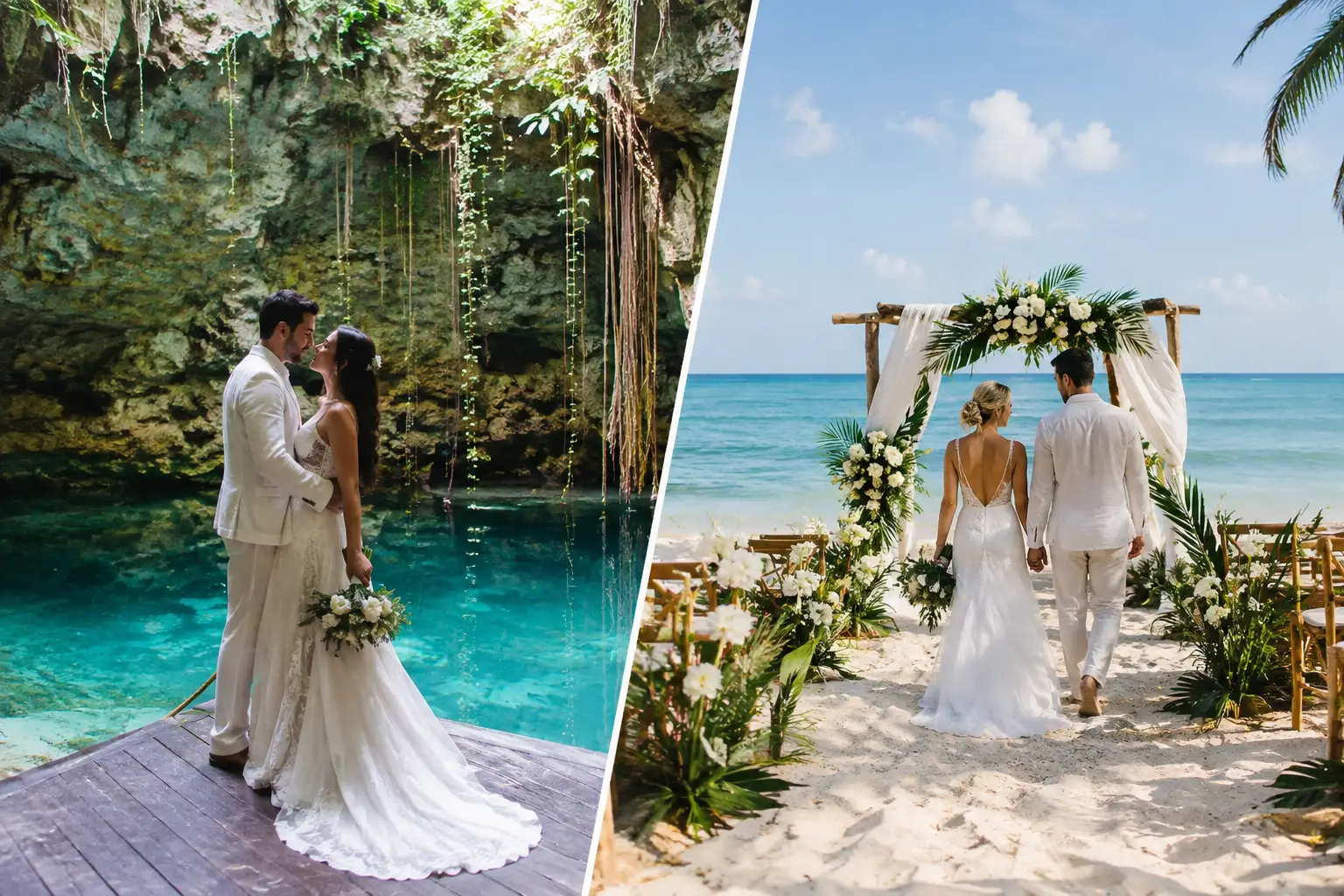
Tulum Cenote vs Beach Wedding: Which One Fits?
A Tulum cenote vs beach wedding decision often comes down to one unforgettable moment: Do you picture exchanging vows with the Caribbean stretching behind you, or surrounded by limestone, jungle, and the still blue-green water of a cenote? Both settings are unmistakably Tulum. Both can be deeply romantic. But they create very different guest experiences, design possibilities, and planning considerations.
For couples planning from the United States, the right choice is not simply about the prettiest photo. It is about how you want the day to feel from the first welcome cocktail to the final song under the stars. A thoughtful local planning team can make either setting feel effortless, but understanding the trade-offs helps you choose a venue that truly reflects your celebration.
The feeling: open-air romance or hidden-jungle intimacy
A beach wedding is expansive, breezy, and naturally celebratory. There is something moving about walking toward the water with soft sand underfoot, the horizon in view, and your closest people gathered in a setting that needs very little introduction. Beach venues in Tulum can feel relaxed and barefoot, but with elevated furnishings, candlelight, custom florals, and professional lighting, they can also become beautifully refined.
A cenote wedding feels more private and immersive. These natural freshwater pools are formed within limestone landscapes, often framed by tropical greenery, rock formations, and trees that filter the sunlight. The atmosphere is quieter and more intimate, with a sense of discovery that guests rarely experience at a traditional wedding venue.
If your vision is a joyful coastal celebration with a broad view and a little salt in the air, the beach may feel like home. If you are drawn to a more secluded, editorial, nature-forward celebration, a cenote may speak to you more deeply.
Tulum cenote vs beach wedding scenery
The beach offers a clean, iconic canvas. Its beauty comes from openness: pale sand, turquoise water, blue sky, and the changing colors of sunset. This backdrop works especially well for couples who want soft neutral palettes, airy floral arrangements, flowing fabrics, and a ceremony design that feels connected to the sea.
Cenotes offer texture and depth. Their surroundings can bring rich green foliage, warm stone, reflective water, and dappled light into every image. Rather than competing with the landscape, design often becomes an extension of it. Think sculptural florals, woven details, warm wood, candlelit tables, and lighting that highlights the natural setting after dark.
Neither setting needs excessive decoration. In fact, the most memorable designs honor the location. A beach ceremony may need a custom gazebo or floral structure to define the aisle against the wide horizon. At a cenote, carefully chosen furniture, a statement ceremony arrangement, and layered lighting can create polish without taking away from the landscape.
Consider your photo priorities
Beach photography tends to feel bright, luminous, and spacious, particularly during late afternoon and sunset. Wind can add beautiful movement to a veil, dress, or fabric installation, although it also requires secure styling and a flexible approach to hairstyles and décor.
Cenote photography is often more dramatic and intimate. The shade can be welcome in warm months, while the stone and greenery create dimensional portraits throughout the day. Because light levels vary more at cenotes, an experienced photography team and a well-planned lighting design are especially valuable for evening celebrations.
Weather and comfort deserve an honest conversation
Tulum’s Caribbean weather is part of its magic, but it should be planned for rather than ignored. Beach weddings are more exposed to sun, wind, humidity, and occasional rain. A ceremony held later in the day is often more comfortable, and practical details such as shaded lounge areas, refreshing welcome drinks, fans, and a backup plan can make a meaningful difference for guests.
A cenote may feel cooler and more protected from direct sun, but its natural environment brings other considerations. Paths can be uneven, humidity can still be high, and accessibility may be more limited depending on the property. Guests in formal heels, older relatives, or anyone with mobility concerns may need extra support and clear guidance before the wedding day.
Rain planning matters for both. The Riviera Maya is wonderfully sunny for much of the year, yet no outdoor destination wedding should rely on a forecast alone. A strong Plan B might include a covered terrace, tented reception space, or a venue layout that allows the celebration to continue beautifully if conditions change. The goal is not to make the day feel over-managed. It is to give you the freedom to enjoy it, whatever the sky decides.
Guest count, accessibility, and the flow of the day
Beach venues often offer greater flexibility for larger guest lists and a fuller event flow. There may be room for a waterfront ceremony, cocktail hour, dinner reception, dance floor, lounge seating, and late-night celebration in one connected area. For couples inviting 70, 100, or more guests, this layout can make transitions feel easy and natural.
Cenote venues vary widely. Some are ideal for an intimate group; others can accommodate a larger event with the right production plan. Capacity is only one question. You also need to consider transportation, restroom facilities, vendor load-in, sound restrictions, power availability, and the distance between ceremony and reception areas.
This is where local knowledge matters. A venue can look stunning online yet require careful timing for shuttles, additional lighting along walkways, or specific furniture selections that work safely on natural terrain. With more than 15 years of experience planning celebrations in the Mexican Caribbean, Weddings on the Beach helps couples see the full picture behind each beautiful setting.
Think about your guests, not just your mood board
A beach is usually easier for guests to understand and navigate. They arrive, see the ocean, and settle into the experience. Still, sand is not ideal for every shoe, and a windy evening can affect comfort. Thoughtful details like a shoe station, well-placed seating, and wraps for later in the evening can keep everyone comfortable.
A cenote feels more adventurous and exclusive, which many guests will love. It also asks a little more of them. Clear transportation instructions, appropriate footwear guidance, and a realistic timeline are essential. If your wedding includes grandparents, young children, or guests who prefer straightforward access, assess the route and facilities with care before committing.
Budget: where the differences can appear
A beach wedding may involve site fees, beach access requirements, weather contingencies, and décor designed to withstand wind. Depending on the venue, you may also need to account for generators, flooring, dance floor installation, or additional lighting to create a finished reception environment after sunset.
A cenote wedding can have its own specialized costs. Natural locations may require more complex transportation, production support, pathway lighting, platforming, or venue-specific vendor rules. The setting can reduce the need for large-scale décor because it is already visually striking, but the logistical details should never be treated as an afterthought.
The best approach is to decide what is nonnegotiable for you. If an oceanfront ceremony at sunset is the dream, build around it. If the mystery and intimacy of a jungle cenote are what make your heart race, invest in the guest comfort and production pieces that allow the experience to feel beautifully considered. A realistic budget is not about limiting the vision. It is about directing resources toward the moments that matter most.
How to choose the setting that feels like you
Choose a beach wedding if you want a classic Tulum experience, a sweeping ceremony backdrop, easier flow for a larger guest list, and a celebration that feels social, bright, and connected to the Caribbean.
Choose a cenote wedding if you want a private atmosphere, a more unexpected natural backdrop, intimate guest interaction, and design that leans into jungle texture, candlelight, and a sense of place.
Some couples do not have to choose only one. A cenote ceremony followed by a beachside welcome event, or a beach wedding with a jungle-inspired reception design, can bring together different sides of Tulum. The key is not adding locations simply for variety. It is creating a weekend that feels coherent, comfortable, and unmistakably yours.
When you imagine the quiet seconds before you walk down the aisle, notice which scene brings you closer to the feeling you want to remember. The sound of waves, or the stillness of the jungle, may give you your answer.
Comments are closed.